
The advantage
Why inboard
drops are faster
Every gain below comes from one idea: leave the tops where they are, and take the width out of the drops. Nothing else on your bike has to change.
The case for inboard drops
You ride better in wind
Headwinds ruin rides and sap energy. In a race, crosswinds split the group and you may never get back on. You ride in three-dimensional space, so we give you hand and body positions you can’t get any other way to cut drag and slice through the wind.
You keep the brakes on screaming descents
Most ways to get aero take your hands off the levers. Forearms teetering on the tops is fast, but hard to hold and unforgiving. A pothole, a squirrel or a gust can cause a panic grab, and any delay reaching the levers can mean disaster. Ours keep the controls in reach — tops or drops — which breeds confidence in corners too.
Your climbing bike becomes an aero machine
Getting aero is a compound effect of equipment and rider. A new frame looks good, but today's bike parity puts it well down the hierarchy of gains. Body position is number one, and the cockpit is where it happens. At 225 g our carbon bars cost you nothing uphill while delivering a real advantage in wind, on the flat and downhill. As one professional put it, it is a no-brainer.
You get real confidence in the drops
Think ski tuck, with brakes and control. React quickly to traffic, gusts, animals and road hazards. Real drops let you adjust between minimum and maximum width organically. Drop your aerodynamic floor, minimise drag, and present a compact profile and weight distribution for maximum stability.
It works on gravel, not just tarmac
Go big on top. Narrow tops are twitchy in groups, on gravel and in wind. We keep you wide where control and vision matter, then the drops bring free speed on demand. More on gravel.
One position all day is what hurts you
Riding a single posture makes you susceptible to repetitive use injury. New hand positions in three-dimensional space bring relief from the same tired shapes that lead to nagging pain over time.
The tops are the ones you already know
No sacrifices there. Our tops haven’t changed, and that is where you spend 80% of your time. Streamlined corners and sculpted contours fit cushioned tape without bulk, giving you comfort and aero savings at once.
Ergonomics designed, not inherited
Shallow drops put you in compression for little benefit. Specialty bars limit your options. We built new positions inside the framework of a traditional drop bar — even the undersides of the tops are sculpted to match your natural forearm angles.
Stiff centre, room for your kit
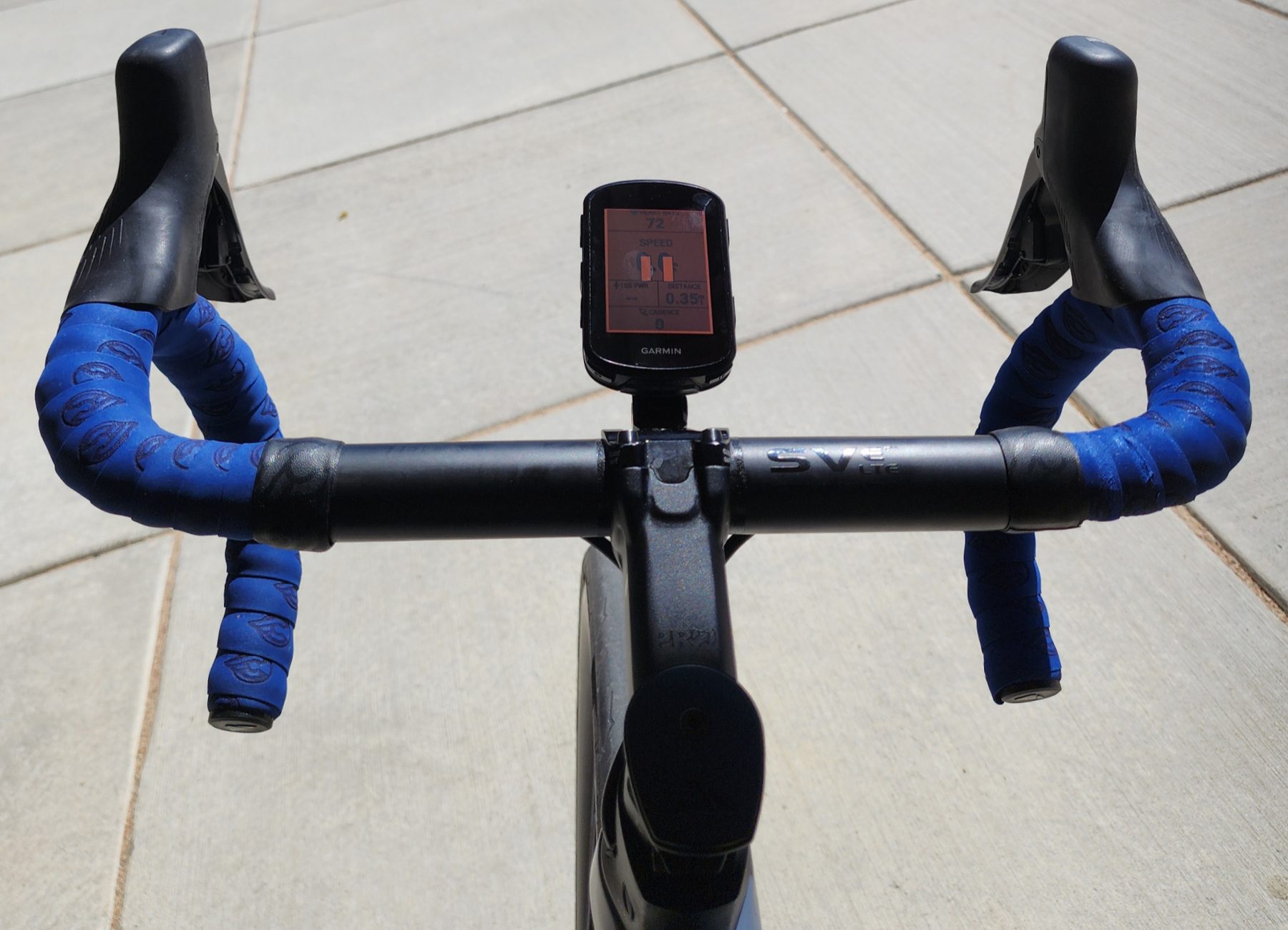
The centre tube is massively stiff, with room for your computer, camera and more, and it stays easy to grip. Sculpted corners are aero and make transitions in and out of the drops quick. Five-hole routing keeps cables out of the way, optionally porting through your stem.
And it’s the cheapest place to buy speed on the whole bike. Frames have converged so far that drag differences between them are almost nil. The cockpit is where the gains are left, and watt for watt, dollar for dollar, nothing else comes close.
Racing under the 2026 UCI rules
We meet the
width rules
Following the UCI's September 2025 update, the handlebar rules in force from 1 January 2026 for mass-start road and cyclo-cross are an overall width of 400 mm outside to outside, a maximum flare of 65 mm per side — defined by the UCI as the lateral range from the drop to the top of the bar — and an inner measurement between the brake hoods of 280 mm.
| Measurement | UCI limit* | SVELTE FSC 42/33 |
|---|---|---|
| Overall width, outside to outside | 400 mm min | 440 mm |
| Flare, per side | 65 mm max | 45 mm |
| Inner width between brake hoods | 280 mm min | 380 mm |
* Figures reflect the UCI's September 2025 update, which supersedes the June 2025 proposals. Flare is defined there as the lateral range from the drop to the top of the bar, per side.
Our smallest size clears all three. The larger sizes are wider on the tops with the same bends, so they clear them by more.
Read the rules in the UCI's own words: UCI press release, 25 September 2025. The UCI has asked its Equipment and New Technologies Commission to review the 280 mm hood measurement during 2026.
We hold the U.S. patent on inboard drops.
Independently tested
Tested to
ISO 4210-5
Carbon asks for proof, so we bought it. A production bar was submitted to ACT Lab, an ISO/IEC 17025 accredited laboratory, and run against the racing steering test methods of ISO 4210-5. Size 44/35. It passed all three.
| Test | Compliance criteria | Result |
|---|---|---|
| Fatigue, stage 1 | 280 N × 100,000 cycles | No cracks, no fractures |
| Fatigue, stage 2 | 400 N × 100,000 cycles | No cracks, no fractures |
| Lateral bending | Permanent set 15 mm max | 2.83 mm |
The bending result is the one worth reading twice. Loaded sideways at 1,000 N — roughly the weight of a small car pressed against the drops — the bar kept its shape to within 2.83 mm, under a fifth of what the standard permits.
What riders say
Truly amazing. The ultimate application of the drop bar … honestly much better than I expected. You have to ride them.
John Howard — gold medalist, record holder, road race and TT champion, Bicycling Hall of Fame