
Frequently asked
Questions,
answered plainly
What riders ask us most about our geometry, comfort, sprinting and racing rules.
Are they comfortable?
If you haven’t tried them, you wouldn’t know how comfortable they are. They’re easy to ride because you choose where to put your hands, from full width to maximum aero or anywhere in between.
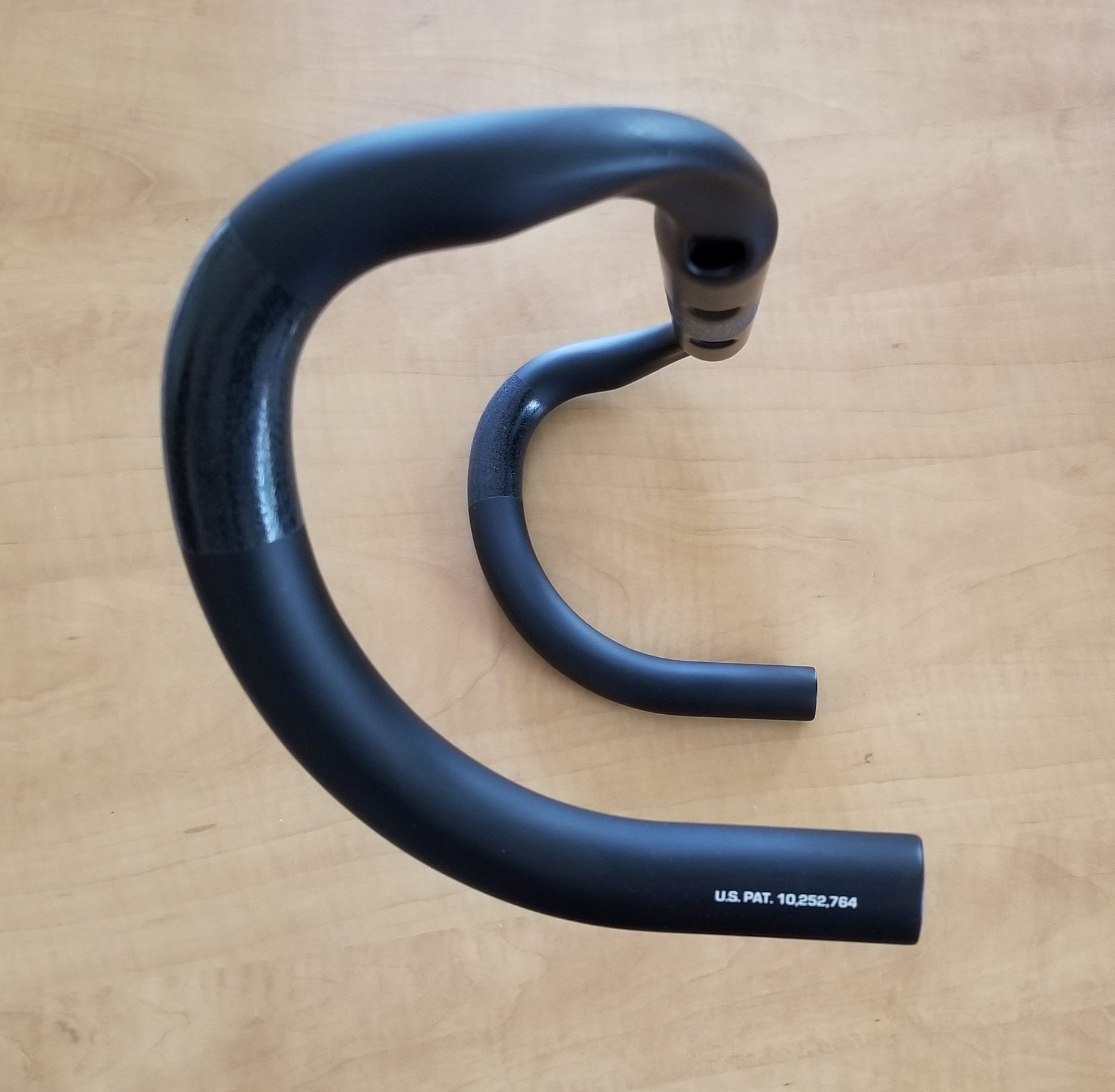
Leaving your tops alone means you can bend your elbows or centre your hands as you wish. Generous reach and drop give you options for different conditions. We carve out the underside of the bar tops for access in and out of the drops and to match your natural forearm angles, then shrink the corners so cushioned tape fits without bulk. Our classic bends through the hooks are proven, the long drops are trimmable and support your hands through the full extension of your reach, generally off sensitive nerves, and the inward bend of the hooks sits perfectly well in the hands. Carbon models flare back out gently at the ends to improve knee clearance out of the saddle and create a wider support path, aligning your hands better with your elbows in different positions.
Set your brake levers vertical. New lever and shifter designs that flare outward suit these bars especially well: with ours they end up straight up and down, and you get all the same advantages.
What’s wrong with common bars?
Typical bars are limiting. Compacts restrict hand placement. Drops flared out were designed for heavy touring bikes decades ago and catch more wind resistance, which isn’t what you want. Undersized tops don’t fit you by definition, and are neither comfortable nor ergonomic when you are stuck with them all the time. Worse, they’re twitchy and make riding nervous for you and everyone around you — a bad idea in groups.
An undersize bar is small everywhere, all the time. You steer, climb and descend on tops sized for a wind tunnel rather than for your shoulders, and you accept that compromise on every ride to gain an aero position you use on some of them. The UCI has since ruled those widths out of mass-start racing altogether.
Ours are sized conventionally on top, where you spend most of your time, and the width comes out below. You choose when and how much to use the inward bends. Changes are fast: from max aero to nearly full width is just a flick of the wrist, without lifting a hand off the bar. No bar ends poking out sideways, either. We didn’t invent the drop bar. We made it better.
How do you sprint?
The sprint decides nothing if you arrive at the front already spent. Getting there is the work, and the aero position is what saves you for it.
Your tops are unchanged, so short sprints get the same leverage you have now. Below, the drops come in and then flare gently at the ends, which keeps you narrow in a bunch with no bar ends to catch someone. Want a wide stance? Slide up in the hooks. The undersides are sculpted to secure your forearms in an aero drops sprint — if track riders can sprint in tight drops, so can you.
Will they restrict breathing?
Restricted breathing is an old wives’ tale. Look at any time trial setup or set of extensions — we’re less restrictive than either. Those lock your hands, forearms and elbows in one place. We don’t.
You bring your hands in to get aero without locking yourself up, and you’re still free to move. What we give you is options — you are never locked in.
We support 90-degree elbows on the tops too — another reason we left them alone. It’s fast in the right conditions: straight roads, smooth tarmac, minimal crosswinds. But control is compromised, drafting isn’t recommended, and it’s hard to sustain. Contortion and discomfort cost watts as well. You want more good options for real-world riding, and you can ride in our drops for longer, with control, in more situations.
Are they stable at speed and on downhills?
There are times for tops and times for drops. A tight position gathers your mass into a small, dense shape instead of spreading it across the wind — think dart rather than sail. Less of you is exposed for a crosswind to push against, so the bike tracks the line you chose rather than the one the gust wants.
You can adjust your profile anywhere along the drops as conditions demand, without ever raising up or taking a hand off the bar. High in the hooks is nearly as wide as on the tops, and the ability to react instantly is built into the shape — brakes and shifters stay at your fingertips throughout. Extensions do the opposite: they make you long, open you up, and put the controls out of reach exactly when you need them.
What about race rules and governing bodies?
Our models are good for the sport and the sort of innovation governing bodies prefer. You shouldn’t have to contort yourself or take on risky behaviour to find a good position. Our efficiency leads to better performance in breakaways, chasing, in the wind and getting back after a mechanical — and ultimately to faster splits and more excitement. Unlike most aero positions, shifters and brakes stay at your fingertips and you can modulate safely for control. See how we meet the 2026 UCI width rules.
Important cautions and additional information — please read
These answers are provided for convenience and courtesy. Like many sports, cycling has inherent dangers. There is no warranty, nor warranty of fitness or merchantability for a particular purpose, expressed or implied. Statements may contain opinions. Always consult your component or bicycle manufacturer and reseller before installing, using or interfacing any gear with our products. Carbon fibre products in particular may crack or fail without warning and should be inspected before each use. Policies and prices are subject to change with or without notice.